 Societal prejudice that exasperates trauma
As a population we often forget that children are in care through no fault of their own, and we brand them with societally held prejudices that exasperates their trauma. Their actions when experiencing trauma (and the upheaval of everything they know) cannot be helped without the therapeutic support from a supportive, confident & well trained care giver. We see daily how therapeutic and tailored support makes small, incremental changes in our children’s behaviour and attitudes towards their futures. Small changes that snowball into monumental moments that beforehand, seemed far out of reach. Small changes create monumental moments. This has been the reality for our North East foster carer Debbie and her foster daughter, SW. SW came to The CFT with a reputation as a bit of trouble-maker who frequently absconded from school. But through the hardwork of her care givers and her sheer focus and determination has turned her school life around and is now an A-Level student with hopes of becoming a primary school teacher. Debbie wanted to share this fantastic milestone through our Andrew Turner Award which SW was awarded, acknowledging her unbelievable turn-around. Here’s Debbie’s nomination in full – When S came to us in 2021, she came with a reputation as a bit of a troublemaker in school, having been known to runaway. It was clear at the end of year 10 that this school was not suitable or meeting S’s needs. We fought social workers, schools and all the relevant people who said moving her at this point in her studies was wrong. We persevered and won the battle and S began her final year of school at a different academy. Despite changing some subjects, or modules it was clear if S was going to achieve at the end of the year (and prove that we were right to move her), that she was going to have to work very hard, and boy did she. When many of friends were out socialising, S would be found with her head in her books, studying at any free opportunity she had. She had to be encouraged to take a break, but she was determined. At the end of her school year she passed every single subject, and although she had to condense two years of study into just 9 months, she gained an average “6” in her subjects. December last year S was invited back to school for an awards ceremony that we attended with her. S picked up 3 individual awards: Progress in Geography, Achievement in Food and Nutrition and Pastoral Team Award. S has now begun her A-Level studies with the aim of eventually becoming a primary school teacher. Hopefully S is as proud of herself as we are of her!! Confident carers providing the best chance for children to thrive As a foster carer with The CFT – Confidence is a huge part of ensuring as a team we provide the best outcomes for our children. Confidence means being steadfast in the face of adversity. Confidence means demonstrating that when you know something isn’t right, to fight for positive changes no matter the barriers. We stand alongside our carers, who arguably get to know their foster children much better than any teacher or health professional ever could. Fighting for change meant SW had the best possible chance to make her future a reality, making positive choices at home and in school. What an outstanding achievement. If you can support a young person to reach their full potential – we want to hear from you. Source: https://thecft.org.uk/  Barnardo’s and NHS England have joined forces and are looking for young people aged between 14 and 24 years-old to speak out on the health issues that matter to them to help shape mental and physical health provision in England.
The NHS Youth Forum, which is now being run by Barnardo’s alongside NHS England, has launched a recruitment campaign to find new members who will help to inform, influence and bring innovation to NHS practices for their peers. After recently being appointed as a partner for the NHS Youth Forum, Barnardo’s is working with NHS England to recruit new members who are keen to speak out about health issues and become involved in decision-making processes to help shape future services and practice. Members of the Youth Forum work to gather the views of other young people across the country by running surveys and deliver recommendations to NHS England. Previous findings have influenced policies relating to healthcare inequalities and primary care. Other reports have been shared with the United Nations Committee for the Rights of a Child. NHS Youth Forum members will also regularly attend meetings and participate in discussions with NHS senior staff and decision-makers. This gives them the opportunity to learn and develop skills including team working, public speaking and building self-confidence. Josh Harsant, Barnardo’s Head of Voice and Influence, said: “At Barnardo’s, we recognise the importance of giving children and young people the opportunity to have their voices heard on the issues which matter to them most. Therefore, leading the NHS Youth Forum is a very natural fit for us. “We hope the forum will champion key issues and provide real insight into how to provide solutions which will be both effective and sustainable for generations to come. So, if you or a young person you know is passionate about improving health care for children and young people and wants to help make a difference then please do get in touch.” The NHS Youth Forum was established nearly 10 years ago to give children and young people the unique opportunity to share their views on how physical and mental health services are run across England. Working with young people and communities is critical for the NHS to create a health and care service which works for people of all ages. Alongside the forum, 11 to 24-year-olds can also apply to be part of the wider NHS Youth Advisory Network. The network is consulted on key health issues impacting the NHS but in a more informal manner, such as through video calls. Barnardo’s and NHS England are looking to double the number in this network to 100 in the coming months and recruitment into this network is ongoing. Duncan Burton, NHS Deputy Chief Nursing Officer for England, said: “Listening to children and young people and engaging them in decisions that affect their health and care is crucial. Their voices bring fresh insights and perspectives that ensure services meet their needs effectively. “For nearly a decade, young people have been working with the NHS and directly influencing health policy in significant areas such as asthma, healthcare inequalities and mental health. They have made a difference to the lives of other children and young people, and we are thrilled to be continuing this important work in partnership with Barnardo’s. Applications to join the NHS Youth Forum and the NHS Youth Advisory Network can be made here. The closing date for the NHS Youth Forum is Monday 4 March 2024. Source: www.barnardos.org.uk/  The free programme, created by Quaker Social Action, St Christopher’s Fellowship and the Money and Pensions Service, will start to bridge the gap and give young people in care the same opportunities as everyone else.
Participants will be equipped with the knowledge and skills to provide the informal money learning that typically happens successfully in a family setting. These include tips, conversation starters and key things to know by milestone ages for young people. Offering such bite-sized guidance for relevant everyday life and responsibilities, the co-produced programme resources signpost information to enable young people to ultimately grow in confidence and have positive conversations with the adults that care for them, thereby reducing anxiety around knowledge of financial matters. All resources have been developed with young people’s input in conjunction with those responsible for their welfare. The training that leverages them will be rolled out to key authorities across London and sector professionals supporting children and young people. But beyond this initial activation, the collaborators are keen to share the resources further afield with any parties who feel it could add value for the work and support they offer to young people in their care. Carrie Comfort – Manager of the ‘Made of Money Project’ at Quaker Social Action states… “Young people told us it was important to be optimistic about their futures, as well as preparing them for challenges. These resources encompass a range of topics to equip them.” Similarly… Jonathan Whalley CEO at St Christopher’s Fellowship believes “By collaborating with our partners, we have helped produce savvy guidance on important financial life skills that will empower our staff and foster parents and therefore ultimately the young people entrusted to their care.” Lisa Davis, Senior Policy Manager for Children and Young People at Money and Pensions Service, said: “Our experiences in childhood prepare us for adulthood and learning about money is a very important example. “Managing your finances will become a daily part life and the decisions we make can be complex, so being taught early on can make all the difference. “This vital partnership is another step towards giving young people in care the same opportunity.” For access to free downloadable guidance linked to the programme and to express interest in future training opportunities please see www.quakersocialaction.org.uk/training/money-springboard Source: www.stchris.org.uk/news/  A year ago today, the government set out its 'Stable homes, Built on Love' strategy to reform children's social care. Here's what's happened since. ‘Stable Homes, Built on Love’, published a year ago today, is a mixture of short-term ambitions and ‘pathfinders’ to test major social care reforms and longer-term ambitions. These were picked by government from years of research, reviews and hours of consultation with young people, families, and practitioners. However, it has taken much longer than a year to get to where we are, and there is still much further to go to create a children’s social care system fit for the future. 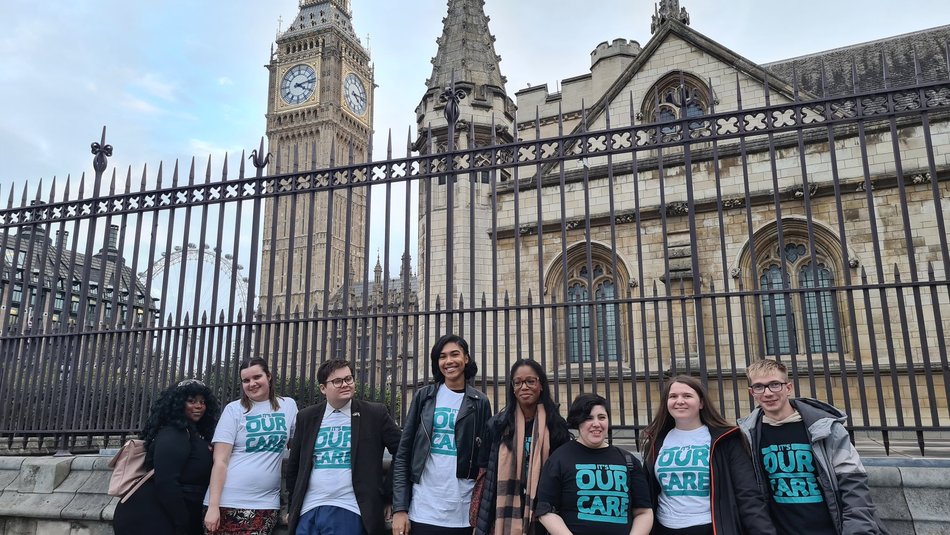 What has been the journey so far? December 2019: the Conservative Manifesto pledged to review the care system in England. December 2020: Josh MacAlister was announced as chair of the Independent Review of Children’s Social Care. March 2021: the Care Review began and the Competition and Market Authority (CMA) launch a study of children’s social care provision. December 2021: a national child safeguarding practice review was triggered in response to the murders of Arthur Labinjo-Hughes and Star Hobson. March 2022: the CMA publish their final report declaring the children’s social care market ‘dysfunctional’. May 2022: the national child safeguarding practice review and the Care Review’s final report are published. The government immediately announced more funding for family hubs, set up a National Implementation Board to oversee delivery of reforms, and boost efforts to recruit more foster carers. November 2022: consultation on the Care Review’s final report closes. February 2023: the government published their strategy, ‘Stable Homes, Built on Love’. Change takes time It has already been nearly three years since the Care Review began. The average time of a single episode in care is just under two and a half years. So for lots of children in the care system right now, their whole care experience will have been untouched by the Care Review. Read more about the Care Review We support the pathfinder approach and acknowledge that major reforms need to be tested and evaluated. However, the current phased (pathfinder) approach taken by government to implement improvements, means wholesale reform is delayed until 2025. "By not investing into the system in the meantime, we estimate that this delay will cost an additional £1bn over 10 years. [1]" Further delays must be avoided after the general election. Meanwhile, children and families are struggling to get the support they need or are receiving it too late. And more children are in care than ever before. There are:
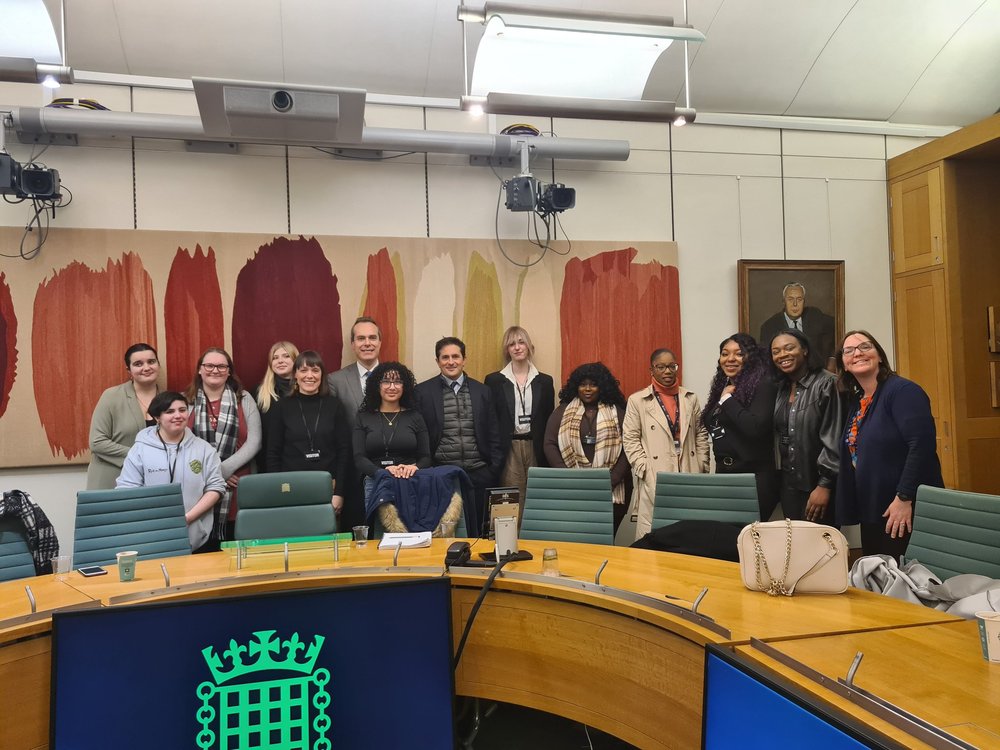 Care experienced young people meeting Ministers Johnston and Mercer What about the general election? There is a high level of uncertainty about what the next general election will mean for the children’s social care reform programme. The next general election is expected to happen sometime this year. Yet, opposition parties have not explicitly committed to taking it forward and there’s no guarantee that the existing reforms will be delivered. We’re working hard to make sure all parties commit to improving children’s social care. Over the last few months we have:
"Overall, we’d like to see all parties commit to investment in, and reform of, children’s social care, to ensure that children in need of help and protection get the right support, at the right time, to achieve good outcomes."   As we stand at the start of 2024, I wanted to share some reflections and unveil our St Christopher’s Fellowship roadmap that will not only navigate us through tough times in the sector, but secure our future success is supporting children and young people.
We are no strangers to challenges. They come, they test us, and with resilience and innovation, we emerge stronger than ever. We have already been doing this for 153 years and this year is no exception. We find ourselves at a pivotal moment, which provides a clear focus and an opportunity to redefine our onward journey. I am delighted to introduce our new five-year strategy. It’s not just a plan; it’s a promise to steer our ship through stormy seas and set a course towards growth. This strategy is about evolving and emerging with newfound strength and unwavering determination. So, what’s in the recipe for success? Firstly, it’s about recognising our strengths and building upon them. We have an organisation made up of exceptional teams who bring their A-game every day. Together, we can be an unstoppable force, and we must harness that collective power. Secondly, our expertise. We must leverage what we know, embracing continuous learning, and stay ahead of the curve in our ever-evolving industry. This is particularly relevant for our innovative and exciting practice across the London Accommodation Pathfinder (LAP), Fostering, Supported Accommodation and Edge of Care work – areas in which we anticipate we will continue to grow and develop. And pushing the boundaries of best practices. We don’t just want to be good; we want to help define what good looks like – to encourage our sector colleagues to raise their game. We will soon be able to share our strategic plan in more detail. You will see a well-thought-out and diligently created road map that remains child-centred, values driven and builds on our organisational strengths. It is a plan based on input from our own staff and the young people that we serve. Their voices have been baked into our onward approach. We face the future head-on, with optimism, innovation, and a steadfast spirit. St Christopher’s Fellowship is not just an organisation; we create brighter futures for young people in care and have the capacity to bring about truly positive change. Here’s to a year of challenges conquered and a focussed approach to building the foundations of future success. Jonathan Source: www.stchris.org.uk/news/  One of TACT’s foster carers has been featured in an episode of The One Show.
Dan chatted to former Olympian Fatima Whitbread, who was in care herself as a child, about various schemes and initiatives that have the potential to support existing foster carers, whilst also attracting new carers. One of these initiatives is the establishment of ‘fostering friendly’ workplaces. Many people dismiss fostering because they already have a full-time job. Fostering friendly workplaces offer foster carers additional support, such as more annual leave, to help with fostering commitments. Dan spoke about fostering whilst retaining a full-time job. He got additional leave to attend training and meetings: “I think it is just the time commitment – every child will have several meetings that you have to attend that will always be during the working week. “In the past if I was to go on a mandatory training course for first aid, I would have taken a day’s holiday to do that, whereas now I can take that day off work and use my holiday with the children which is much more beneficial.” John Lewis is one of 160 fostering friendly companies currently in the UK. Dame Sharon White, who is the current Chair of The John Lewis Partnership, talked about its new initiative: “If a foster carer has more support, not only is it incredibly motivating for your people, but actually it creates real engagement and real loyalty to the business – before you know it, we’ve made real impact.” It is clear that offering flexibility for your foster-caring workforce benefits both employee and business. Staff are granted more time to spend with the young people in their care, and employers gain staff loyalty. TACT are proud to be one of the 160 UK organisations listed as being fostering friendly. If you are currently working and are interested in becoming a foster carer, we encourage you to enquire with TACT to discuss your individual circumstances in more detail to understand how fostering could work for you. Source: www.tactcare.org.uk/  Swansea care leaver Darran Thomas Roberts has not only found himself filming with actor Lennie James, but discovering just how much the two have in common. The 21-year-old has been filmed alongside the LA-based star of the Walking Dead and Line of Duty, and their joint production has just been released in a bid to encourage more people to consider fostering for the children’s charity Barnardo’s. Darran is supported by Barnardo’s Swansea Bloom service which helps young people build their independence after leaving care. Lennie too was in care, and both had such positive experiences of foster families that they have joined forces to back the charity’s current campaign to recruit much-needed foster parents. 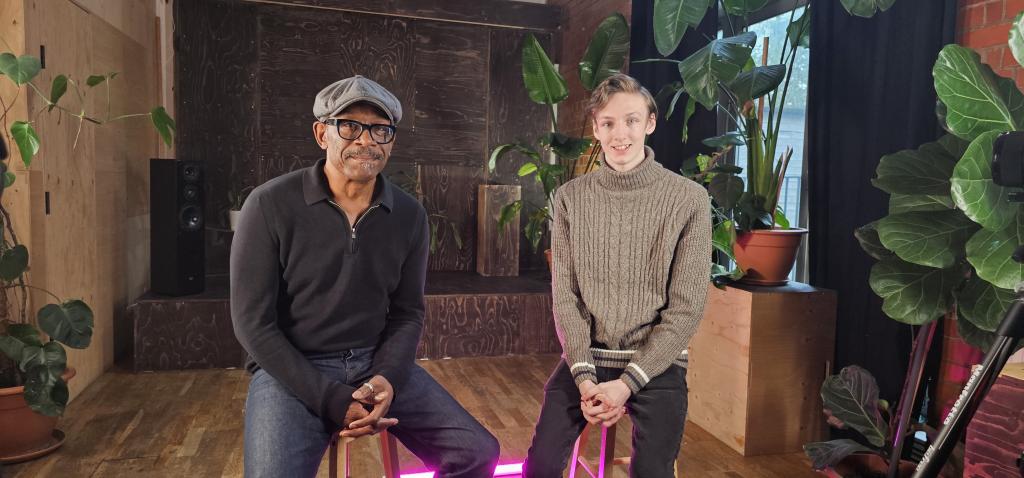 Lennie, who was born in Nottingham, is currently in Britain taking a break from his successful Hollywood career and, as an ambassador for Barnardo’s, agreed to front the campaign. Darran had the chance to travel to London to film with Lennie for a series of campaign videos and immediately felt at home with the actor, discovering just how many childhood experiences they had shared. He said: “Lennie was really cool and down to earth, and the conversation just flowed naturally. People who have been in care don’t often talk about their experience, so it was good to be able to talk freely to someone who had been through the same things as me, moving from a care home to a foster family and initially finding the change scary.” Lennie made quite an impact on Darran, who went into care at the age of nine and spent time in a care home before moving in with a family for five years. “Hearing about how Lennie had the courage to move to LA, even though he didn’t know if his acting job would last for long, really opened my eyes. It made me realise I don’t have to look to my past and I shouldn’t be afraid to take on new things in life and take a risk,” said Darran. Actor Lennie moved into a children’s home when his mum died and was later placed with his foster mum Pam. “With her I found not just a stable place to call home but a place where I could belong. She opened not just her home but her heart to a kid who really needed it,” he said. Darran also appreciated his foster parents Keith and Carol, who he described as “amazing”. He said: “Becoming part of a foster family helped me massively, even though it took me a couple of months to adjust because I had really enjoyed the care home. “I arrived in the family not really knowing right from wrong and I had to get used to rules, but my foster parents involved me with everything, the family caravan holidays surrounded by children and grandchildren, and all the celebrations. “Sadly, Keith died three and a half years after I arrived and it was very hard, I locked myself in my room and didn’t want to come out. Later, the family got a puppy, and I was put in charge of looking after it. It made me feel like I had a role, I was a cog in the family. I would take it on walks and train it and it made me feel better when days were bad.” Darran has been keen to support Barnardo’s current campaign to recruit new foster parents. Latest Welsh Government figures reveal there were more than 7,000* children in care in Wales in March 2022, a number that has increased by almost 23% in the last decade. During that time the charity’s existing foster parents have got older, some have retired, and fewer younger people are coming forward to take their places. The charity is hoping to bust some of the myths around fostering as many people think they are too old to apply, even though there is no upper age limit**. Others think they couldn’t afford to do it, not realising there are fostering allowances available, and some say they wouldn’t foster because they have their own children. Barnardo’s existing foster parents report that fostering is a positive experience for the whole family, including birth children. Darran said: “Fostering is challenging, and I think you need a certain strength to cope with children who may arrive with problems, but if you can get through the difficult times, it can be so rewarding. You can have a positive impact just like my foster parents had on me. “For me it was so important to wake up every day to the same faces, rather than wonder who was on duty in the care home that day. I didn’t have to explain to children in school why different people picked me up at the gates each day, that had been hard in the past.” Darran had enjoyed his time in the care home and was initially worried about moving, but after a few weeks with his foster family he didn’t look back. He said: “When I was with the family, we were always doing fun things. We all sat down to eat around the table together each day, that hadn’t been normal for me in the past. “In the care home I would get my meal and take it back to my room to eat on my own. I never got to do my own washing, go shopping, or have someone spend time with me one to one, teaching me things like cooking. Those things are part of being a family and I’m really glad I got to experience family life. “Now I have my own place, I’m really involved in Barnardo’s Swansea Bloom project for young people who have been in care and I want to do more to influence change in the care system.” To find out more about fostering with Barnardo’s visit www.barnardos.org.uk/foster or call 0800 0277 280 Monday to Friday, between 9am and 5pm. Watch Darran and Lennie on YouTube . Notes to editors
*Latest Welsh Government figures for 31 March, 2022 revealed there were 7,080 children looked after in Wales, which compares to 5,760 on 31 March 2013, an increase of 22.9%. **A YouGov poll of 213 people conducted on behalf of Barnardo’s in Wales revealed that 46% of those surveyed who haven’t considered fostering before, believe they are too old to become a foster parent, when in fact there is no upper age limit to apply. The poll also revealed that only 2% of people who are not currently approved foster parents would consider fostering in the next five years. A total of 14% said they didn’t think they could afford to foster or believed there is not sufficient financial support, unaware of the caring allowances paid to foster parents. 15% of people questioned in Wales said they hadn’t considered fostering because they have children of their own or would like them. Fieldwork was undertaken between 29th November - 1st December 2023. The survey was carried out online. The figures have been weighted and are representative of all UK adults (aged 18+). About Barnardo’s Cymru: Last year Barnardo’s Cymru provided essential support to around 14,000 children, young people, parents and carers through 61 services. We provide vital support to the children and families who need us most, to help with a range of issues including mental health, child sexual abuse and children in care. We listen to children and young people and work to bring about positive change so that they can have a brighter future. Visit www.barnardos.org.uk to find out more. Source: www.barnardos.org.uk  In December, the Education Committee launched an inquiry to evaluate England's children's social care system.
On 15 January, we responded to the inquiry; sharing our views on different issues, including what is going wrong and the specific experiences of disabled children. Below is a summary of our response. In a nutshell The current provision of children's social care is insufficient to meet demand. Different factors are causing the increase in demand for children's social care including underinvestment, poverty and deprivation, the impact of policies in other areas (welfare, housing), and lack of support for families. Decreased levels of investment in early intervention have contributed to the rising costs of late-stage children's social care intervention for local authorities. The current system leaves families waiting for extended periods to receive necessary care. Only £200 million has been allocated to solving the sufficiency crisis despite the annual cost of maintaining the current children's social care system being £10 billion a year. Read more here. Social care “market” The children's social care sector faces a long-standing challenge of insufficient residential settings. The rise in unregistered homes, schools and alternative provision for children is a serious issue for the sector. Councils are placing more children in unregistered placements due to increasing need, limited provision, and reported instances of ‘cherry-picking’ where providers refuse to care for children with complex needs. The shortage of placements has led to more children being placed far from home, and in inappropriate placements, causing councils to pay increased costs. This results in unplanned moves and out-of-area placements, affecting children's well-being. We do not support moving children away from their community where it is not in their best interests. Semi-independent accommodation is the fastest-growing “market” for children, not because it is in their best interest, but because it is more profitable, and easier to run, and there is a constant demand as there are too few registered children’s homes that provide care available. We believe that all children in care need care. We do not support the creation of a new regulation and inspection regime for semi-independent accommodation. Experiences of disabled children There is a lack of support for disabled children or children with additional needs. Just 1 in 7 parents and carers said that disabled children have the correct level of support from the children’s social care system (DCP, 2023). The transition from children to adult services can be particularly stark for young disabled people who do not have a formal diagnosis. Additionally, life is more expensive for disabled people, but many do not receive the financial support necessary to help them live a happy life. Recommendations for the government Make children's social care a central aim of policy across areas such as housing, education, immigration, health, and social care (amongst others). Provide funding for wholesale reform to children’s social care to provide certainty to the sector. Prioritise funding for early intervention services to cover family support demand. Build more sufficiency across the country and ensure a place-based approach to address local authorities’ funding uncertainty and planning. Invest in more respite care for disabled children. End the use of semi-independent accommodation, mindful of the recommendation made in the Care Review that “all children should receive care where they live by 2025”. What’s next? We are currently undertaking a research project on unregistered settings. We have volunteers working on research projects in children's social care areas where there are research gaps (e.g., the link between poverty and children entering care). The projects will be published within the year. You can keep up with our updates via our website or by signing up to our campaign emails. Source: www.togethertrust.org.uk  .Research commissioned by the country’s leading children’s charity Barnardo’s NI, has revealed that the campaign to recruit new foster carers is being hampered by a number of pre-conceived notions about what it takes to become a foster carer.
The YouGov poll reveals that over half of the respondents (55%) who haven’t considered fostering in Northern Ireland*, believe they are too old to become a foster carer, even though there is no upper age limit on becoming one. The poll also revealed that nearly three quarters of adults in the UK are worried there aren’t enough foster carers to give children safe and loving homes – but only 2% ** of respondents in Northern Ireland would consider fostering a child in the next five years, according to the new data. Hilary Armstrong, Operations Manager at Barnardo’s Fostering & Adoption NI said: “We know there are people in Northern Ireland who would love to foster, but believe things like their age, financial situation, or because they have biological children, would prevent them from doing so. We want to bust these myths, as we believe that any loving person can make a wonderful foster carer. There is no upper age limit and fostering can be a hugely beneficial experience for the entire family, including birth children. At Barnardo’s we offer support and training every step of the way.” The number of children in care in Northern Ireland is at a record high, with almost 4000 children and young people needing a safe home, but despite this, there are fewer and fewer people willing to foster. Gillian Cassidy and Megan Stitt are sisters-in-law from Portaferry and Newtownabbey. With 13 children and several years of fostering experience between them, they’re sharing their experience of welcoming children into their family homes, in the hope it encourages more potential foster carers to do the same. Megan said: “I have three birth children and have fostered three little girls, I also provided day care for two sisters over the past three years. I would say that most of my inspiration to become a foster parent came from Gillian. After Gillian started fostering and when Covid hit, there was such a crisis and so many children during lockdown needed a safe place to live.” Gillian said: “I also have three birth children, one adopted son and one foster daughter who will soon be adopted. When we adopted one of our sons, I started a peer group of friends who fostered and adopted, so we could be a support to each other. It became very obvious very quickly there was a massive need for foster carers in Northern Ireland, and a massive need for people who could support foster carers.” “When we talk to people about fostering, they say things like, ‘I couldn’t let them go’, and it is a really difficult part of fostering, but you do let them go, and it breaks your heart, but then you welcome the next child into your family. The support our family gives us is amazing, it makes me very proud of them. Our extended family are very welcoming and open to the children that are in and out of our lives.” Megan said: “I am so proud of my birth children. When we started our fostering journey, we said to each other we’ll give it a go and if it's too hard on the kids, we'll come back to it in the future. But we have no regrets. They speak about it so fondly and positively.” As part of Barnardo’s Fostering and Adoption campaign, Megan and Gillian are encouraging anyone who has ever considered fostering, to get in touch with Barnardo’s NI. Gillian said, “There’s a family feel to fostering with Barnardo’s. All of the social workers know us and they're very protective of us. They will never ask us to go beyond our capabilities. I feel like Barnardo’s genuinely care about what we're struggling with and they want to do something about it. I think if you’ve ever had a thought in your mind that you might consider fostering – you should definitely take steps to find out more. Also, if you're going to do it, do it now. It's like starting a family - is there ever a right time? You're never going to be 100% ready to do it - you just have to jump in.” For more information on becoming a foster carer with Barnardo’s, please visit www.barnardos.org.uk/foster or call (028) 90652288. The charity’s lines are open from Monday to Friday, between 9am and 5pm. *Of those who are not likely to consider fostering in the next ten years. **Of those who are not currently approved carers. Source: www.barnardos.org.uk  Location: Barnardo's Scotland Fostering Edinburgh Salary: £35,360- £37,700 (FTE) £17,680- £18,850 (Pro-Rata) Plus £312 Office at Home Allowance Contract type: Permanent Hours: 18.5 Closing Date: 30 January 2024 Barnardo's Scotland Fostering Edinburgh have a fantastic opportunity for an experienced Supervising Social worker to join our busy team on a Part Time (18.5 hours) permanent basis.
Location: The successful candidate will work on a hybrid basis with their office base in Edinburgh, however some meetings and training occur Scotland Wide. As a Supervising Social Worker, you will work within a team of supervising social workers, children's workers, therapists, education liaison worker, managers, and admin staff responsible for the recruitment and support of foster carers who provide care to looked after children and young people who are referred to the service from the Local Authority. Some of the key responsibilities are:
Ideal Candidate's must haves:
History of Service Barnardo's has well over 100 years of experience delivering fostering and adoption services across the UK. Our fostering service in Scotland has been operational for over 18 years and rated ‘Good' across most areas from Care Inspectorate. Our fostering Service is supported by Practice Managers, comprising of new and experienced team members. This team is supported by experienced administrative staff, and the work of the supervising social workers, childrens worker (PW2) and a Psychotherapist. The Edinburgh team is the only Scottish Service operating the Mockingbird model, supported by the fostering network. When completing your application please refer to your skills, knowledge and experience in relation to the Person Specification, Job Description and Additional Information document (if applicable) This should be done with an understanding of the context of the service described. Please note due to the high volume of applications for some posts, this advert might close before the displayed closing date. We recommend that you apply for this role as soon as possible. Benefits Workplace Offer: What it means for you The world of work has changed. We are understanding of what works best for our colleagues both current and future as we look to embrace this new way of working. Our hybrid working initiative is based on trust, flexibility and empowerment. We understand our workplace offer means different things to different people, and we encourage those conversations. This may mean working at one of our stores, services, working at home, at one of our Collaboration Hubs or any combination of these.
*T&C's apply based on contract About Barnardo's At Barnardo's we believe in children – no matter who they are, what they have done or what they have been through. Please read about our basis and values following the link below. You will be asked questions relating to them as part of the recruitment process for this role. Our commitment to Equality, Diversity and Inclusion (EDI) is reflected in our values and our practice, and we have invested in this area of our work to ensure that we can deliver on our commitments to be an inclusive employer. EDI is a key enabler of our purpose as a charity and we want to ensure that the diversity of our teams is reflective of the communities we serve and that we continue to learn and develop our work with a focus on inclusion. We particularly encourage applications from candidates from Black, Asian and Minoritised Ethnic Communities, candidates who are LGBT+ and Disabled candidates. Our basis and values Full details and application documents here |
News & JobsNews stories and job vacancies from our member agencies, the fostering sector and the world of child protection and safeguarding as a whole. Browse Categories
All

|

 RSS Feed
|
The Fairer Fostering Partnership
c/o TACT Fostering Innovation House PO Box 137 Blyth NE24 9FJ |